Lake Sunapee is the ideal New England vacation oasis with its endless seasonal activities, waterfront restaurants, summer clubs and quaint inns. Lake Sunapee has evolved and grown into a manicured “ secondnd home” vacation destination over the past 100 years. High quality lake water, fresh air, towering pine trees, and beautiful mountains surround Lake Sunapee painting the perfect New England landscape.
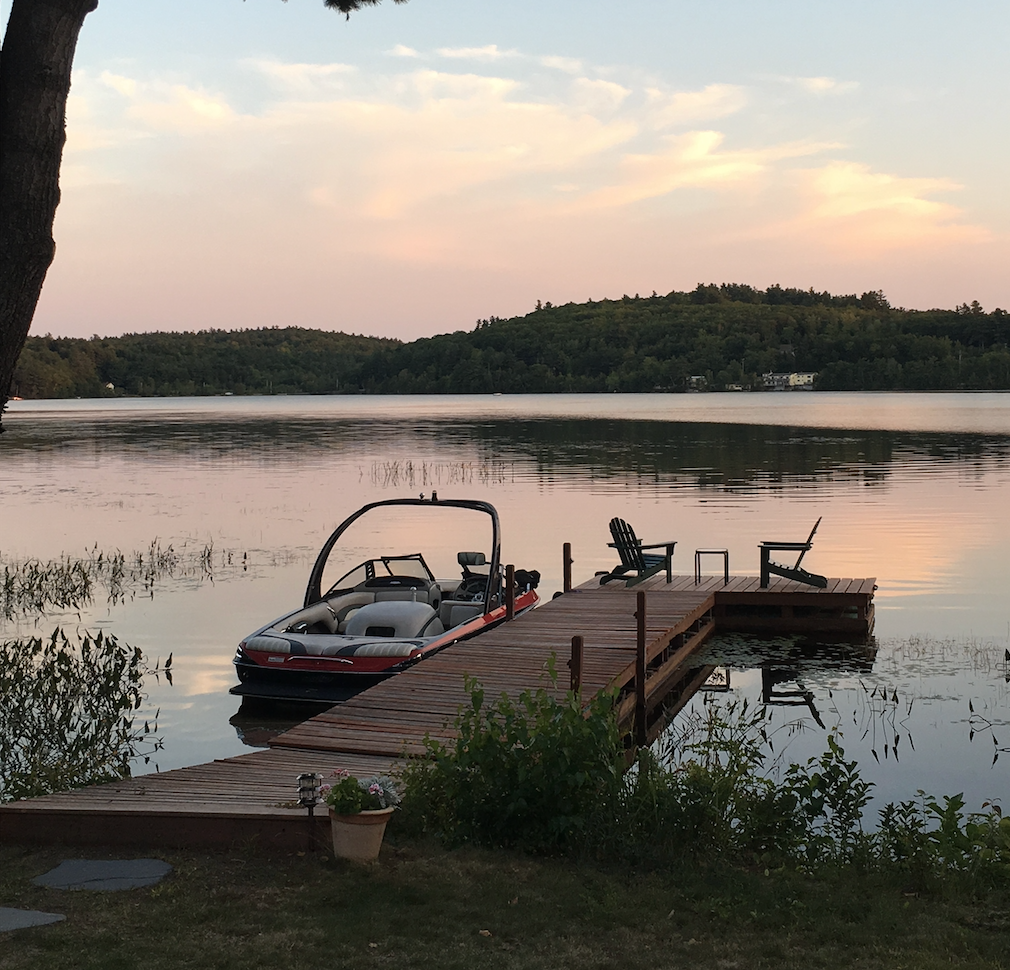
I grew up wandering through the surrounding woods, swimming, water skiing, fishing, and skating across the lake. It is a magical place with a surrounding landscape that I strongly connect with in many ways. Lake Sunapee is the place I call home. For centuries, Lake Sunapee has been a magnet for families from across New England and beyond, to enjoy weekends and holidays in the mountains of New Hampshire. In my short twenty-year connection to Lake Sunapee, I have experienced the lake transition in small ways but nothing in comparison to the transitions the lake and landscape have experienced over the past 100 years.
As I traveled by car from Connecticut to our second home on Lake Sunapee, every weekend for the past 20 years, I never fully appreciated the central role advances in transportation played in changing the accessibility, demographics and development of Lake Sunapee to visitors, homeowners and tourists. As the ownership of automobiles expanded to virtually every household, access to Lake Sunapee expanded to a broader population beyond the very wealthy who historically came to the lake by train in the late 1800s. It was the combination of changing desires of wealthy New Englanders, increased tourism advertising, and the introduction of the Boston and Maine Railroad and the Lake Sunapee steamships that created the vibrant tourism industry on Lake Sunapee.
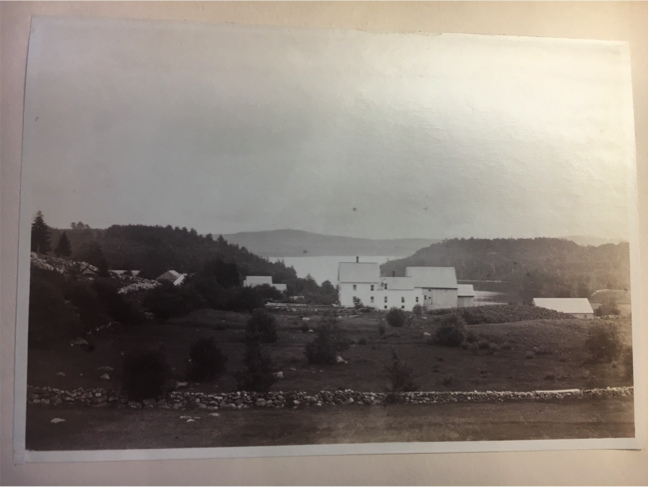
Lake Sunapee was originally founded by the aboriginal Algonquin Indians who named the Lake after the soona “wild goose” and nipi “water” 1 as water and wildlife are two essential aspects of the Lake Sunapee landscape. For over a hundred years only the Algonquins walked the shores of Lake Sunapee until the mid-1800s when the Boston and Maine Railroad expanded their tracks to Newbury, New Hampshire (one of the three towns surrounding Lake Sunapee). The railroad started providing a direct link to New York City and Boston’s bustling wealthy as they began to push for a broader reach, opening the potential for a resort and tourist destination in the New England wilderness 2.
(
As Donna Brown explores in her book, Inventing New England: Regional Tourism in the Nineteenth Century, New England and wealthy Boston and New York individuals experienced a shift in landscape desires during the late 1800s, a desire for a “scenic wonderland to a fashionable summer place, a resort for the increasing numbers of well to do people who found it necessary and desirable to “go away” for part of the summer” 3. This way of life spread across Boston and New York City rapidly, leaving the only gap to be transportation, which the Boston and Maine Railroad filled. New England families were driven by a profound sentimentalization for an earlier authentic New England 4, building a desire for second homes and vacations in rural communities “to escape the perceived ills of industrial development, immigration and overcrowding in cities and to create a domestic sphere for mothers and children separate from the husbands world of work in the city” 5. This is where Lake Sunapee provided the perfect answer to these growing desires.
Lake Sunapee emulated the sense of excitement and thrill of a place where life was easy and no work was needed. “I can still feel the teenager’s sense of urgency, of mounting excitement as we sped, train rocking, toward Sunapee station. The Lake station, with its crowds and bustle! The hum of activity as travelers milled about identifying their paraphernalia, our cumbrous heavily-built chests padlocked against any contingency, receiving my father’s scrupulous attention” 6. This sense of excitement and ability to escape to a new world is common in many recollections of early Sunapee tourism.
Through focused advertising in the New York Times, Boston Globe, Boston and Maine Railroad pamphlets and the New Hampshire government, tourists started to pour into the “uncharted waters” 7 of Lake Sunapee that stood “without a peer among the many summer resting places that mark New England; for nowhere else is its counterpart to be found” 8.
Lake Sunapee became a prime destination for wealthy individuals to enjoy the wilderness and beauty it had to offer. Newspapers and editorials focused on its proximity to New York City and Boston, 9, the endless outdoor and indoor activities 10, and the number of elite New Yorkers who visited 7. These editorials painted a unified, “ideal” New England landscape for prospective tourists.
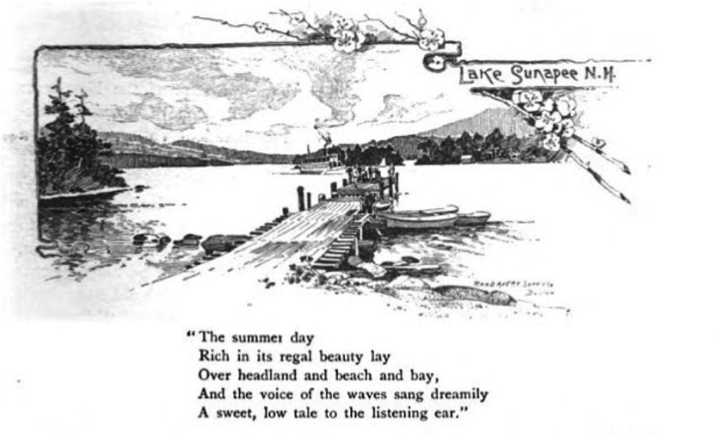
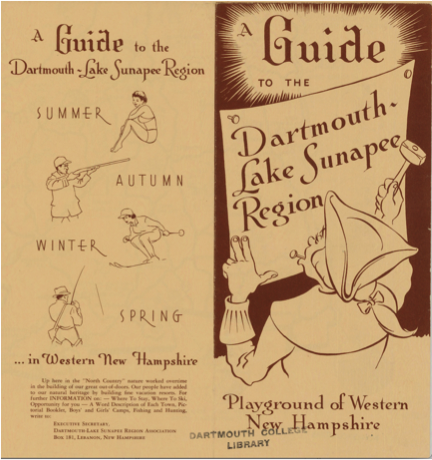
As a result of the focused advertising, the Newbury train station quickly put Lake Sunapee on the map and with the expansion of the railroad came the steamship era on Lake Sunapee, during which time multiple 100- 500 passenger steamers crisscrossed the Lake until the mid-1920s 2. The steamship era helped to spatially navigate and expand access across Lake Sunapee. In the late 1800s Frank and William Woodsum were two major pioneers of the early steamship and tourism industry as they built and launched the Lady Woodsum, the Armenia White, Kearsarge, Weetamoo and Ascutney 2. These steamships visited up to twenty steamboat landings daily, traveling nearly 119 miles per day taking guests, baggage, mail, and food to the many hotels, inns and camp grounds that were located at these various landings from the late 1800s until the 1930s 11. During the summer of 1888, the Edmund Burke, Armenia White and Lady Woodsum sold a total of 15,000 tickets to tourists 12. Without roads and automobiles, the only transportation on the Lake was by way of these steamships and without their implementation Lake Sunapee would never have played such a large role in the tourism industry.
Lake Sunapee was rooted with tradition, hard work, dedicated visitors and seasonal family homes from its inception. It was with the help of these early pioneers that the Lake Sunapee infrastructure made up of camps, hotels and distinct community-based towns was created.
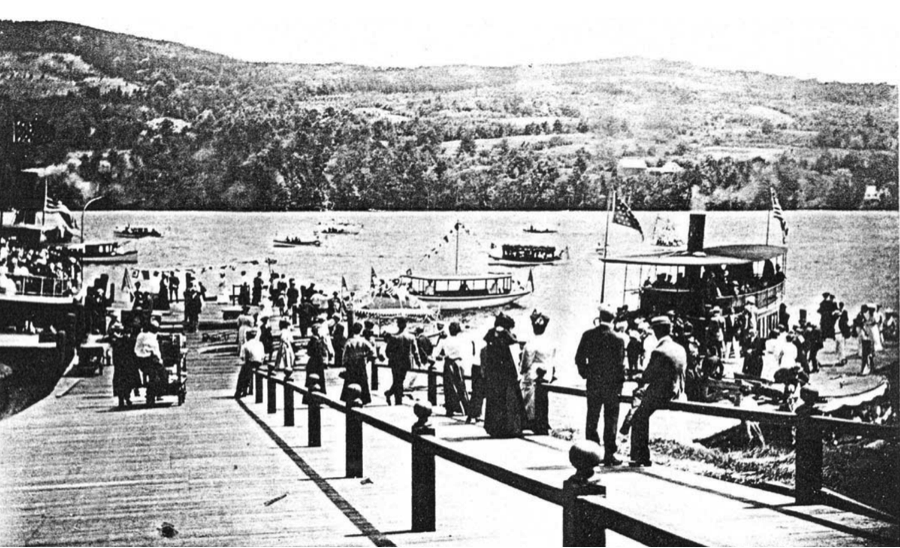
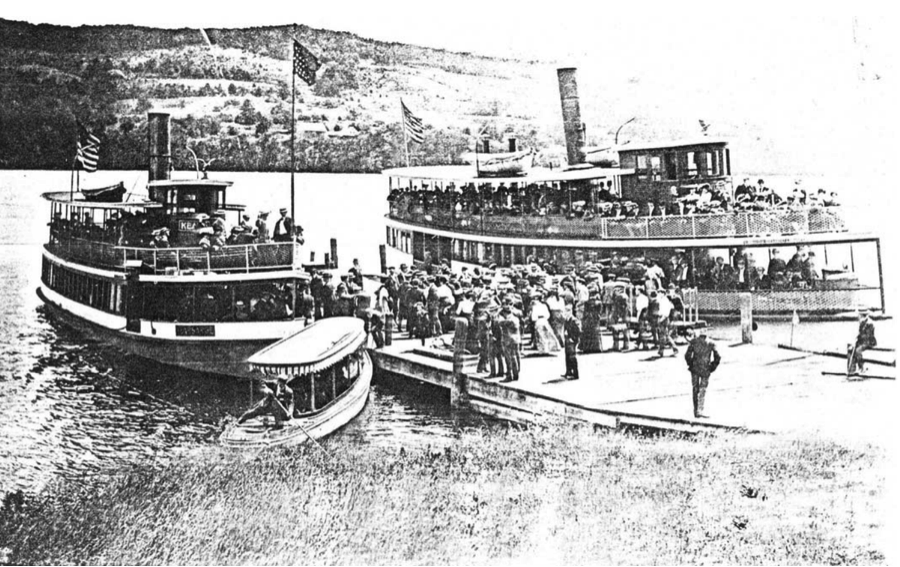
The major tourist towns, communities and developments around the Lake were Sunapee, Burkehaven and Blodgett’s Landing. All of these areas had, and still have, families that were deeply rooted in the development of the landscapes spatially as well as socially.
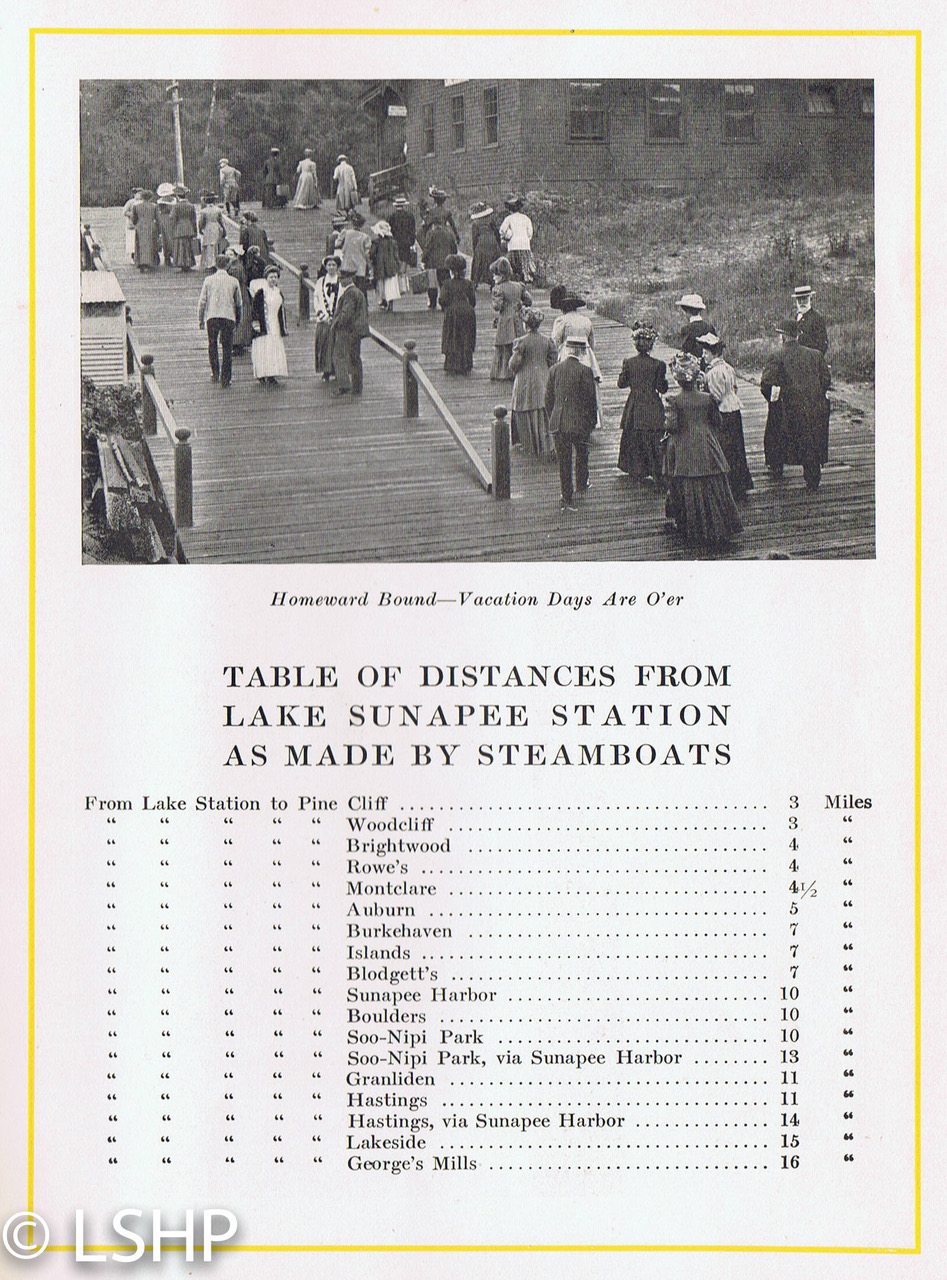
One of the major communities that still resembles many of the community values and infrastructure of its creation, in the early 1900s, is Blodgett’s Landing. Blodgett’s had, and still has today, a unique diversity and unaffected pursuit of fellowship, friendship and fun, producing a very loyal and cohesive community 9. The preservation of that community spirit and attention to issues over the past 100 years reflects the interests of the dedicated residents in that community 13.
While across the lake at Burkehaven, John D. Quackenbos created, the “exclusive, romantically situated” 14 Soo-Nipi Lodge, where the clientele were, according to promotional material, “of the highest moral character” and accommodations were restricted to those who could provide carefully scrutinized references 13. John D. Quackenbos reflected on the “lower class” Blodgett’s Landing community; “George Blodgett leased to anybody who would pay $2 a year for his lot, it mattered not whether the leases represented morality and refinement or whether they were of the demimonde and underworld…” deeming the Blodgett’s Landing development “doomed to contempt a location of great natural beauty” 13.
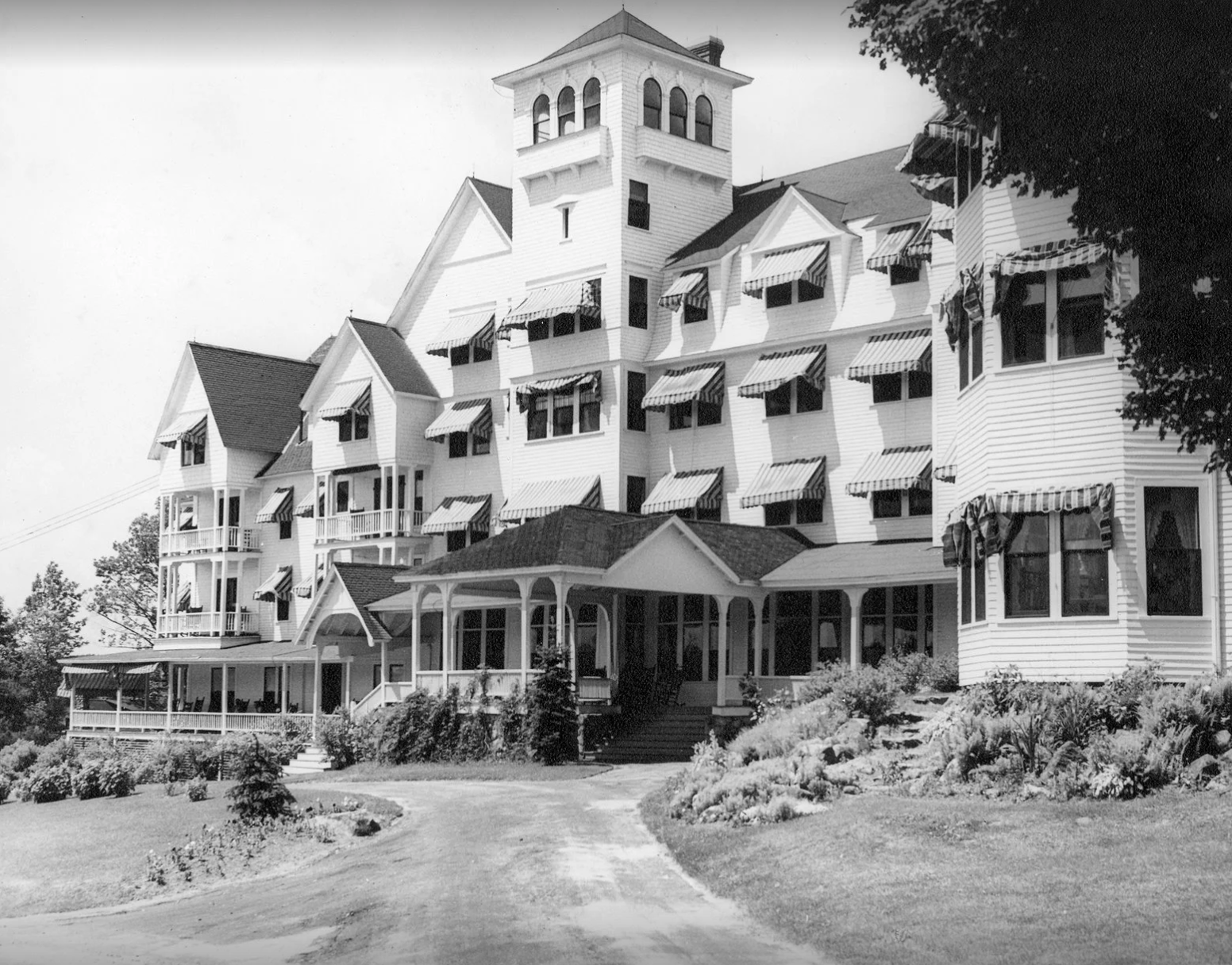
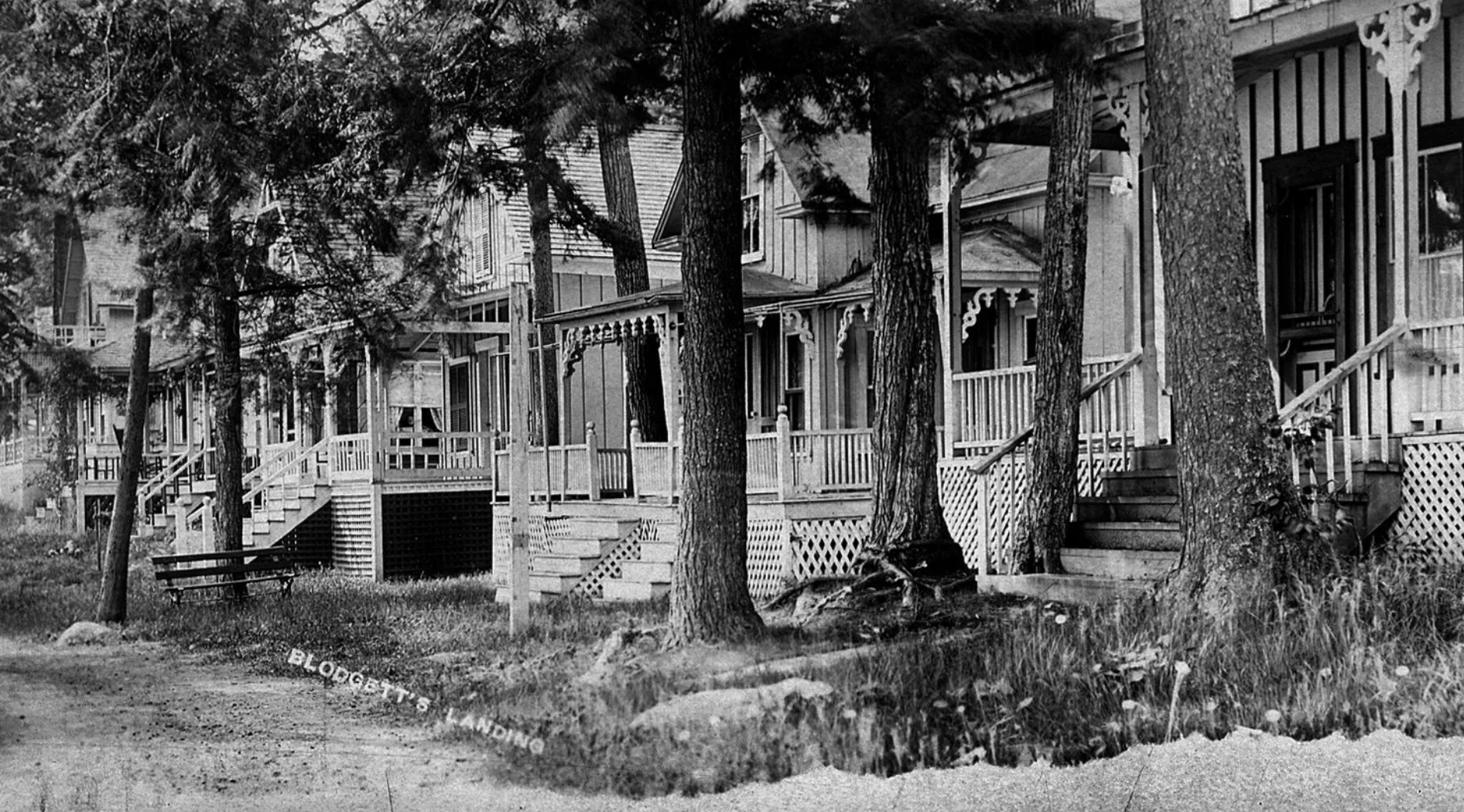
These class divisions are still prevalent today, as Blodgetts Landing still holds true to George Blodgett’s sense of community and fellowship while much of the rest of the lake has followed in John D. Quackenbos’ footsteps as elite, manicured and selective communities. These class structures tie closely with a lot of points that Dona Brown made in her comparison between Martha’s Vineyard and Nantucket 3.
A long time Sunapee visitor and resident Kathleen Cavanaugh touched on some interesting facts about class structure around the Lake and the evolution of the “Lake Sunapee way” 15. Cavanaugh, a second-generation Lake Sunapee summer resident, explained how she experienced the transition between recreation, community and the idea of tourists. Her family that came to Lake Sunapee after World War II felt that “Everyone was in a safe place - we had Eisenhower in the office, the war was over and no one was in a rush - life on Lake Sunapee was easy and carefree” 15. She frequently referred to how simple and easy life was on the Lake. “People would get up in the morning and water ski all day; there were no rules, just endless fun. As visitors, we always felt a part of the Lake; the locals never pushed us away. The biggest changes that I have seen over the years, is that the Lake has lost a sense of community. Back in the 40s everything happened as a community in the town or at the Yacht Club but now with the wealth on the Lake, people tend to stay in their homes and almost be more selective. With that said, not much has changed at Blodgett’s Landing. They seem to have kept a sense of community and history” 15.
Interestingly, I discovered through my research, that the majority of recollections came from individuals who had spent their summers and vacations on Lake Sunapee in camps, communities, settlements and cabins that their families would rent for the entire summer. This observation helped me to better understand the role of hotels on the Lake. While I believe that the hotels were an integral aspect of getting some of these families to the Lake, the communities and generational families appear to have had a much bigger impact on the lakes history. In fact, the Lake Sunapee connection seems to have resonated more deeply with individuals that have had strong past connections with the landscape leaving them with a commitment to the land 16. When people connect with nature, it happens somewhere. Almost everyone who cares deeply about the outdoors can identify a particular place where contact occurred” 7. As Cheryl Morse stated in, Performing a New England Landscape, life-long residents have a much stronger connection with the landscapes they are involved in while newcomers often act upon the landscape but do not have an emotional connection to it 4.
In the mid-1900s the vacation period was becoming elongated as visitors started to come earlier in the season and stay later. Families shifted from hotels and campgrounds to renting and buying cabins scattered around the Lake 17. The proximity of Lake Sunapee to Boston and New York was very important for the creation of the Lake Sunapee tourism industry. Transportation was a vital aspect and the transition in the early 1920s occurred as technology and infrastructure continued to improve making automobiles more prevalent.
In 1914 Captain Frank Woodsum was among the first to sense the inevitable end of the steamship fleet. “One day just before the First World War he was in the pilothouse of one of the boats entering Sunapee Harbor and saw something unfamiliar on shore. Picking up the long glasses for a closer look he discovered that the object was an automobile - the first he had ever actually seen. He handed the glasses to Bud Hobon beside him with a quiet comment ‘Better take a look at that thing, Bud - it means the end of steam boating’” 2. While the steamships have never fully departed Lake Sunapee’s waters, they have taken on a very different role but still embody the early Lake Sunapee tourism transitions we have seen. The steamships transitioned from a utility force to a pure tourism mechanism. During the summer of 1925, this transition was seen as more steamers were taking the 50-mile steamer tour around the Lake than they had ever done before 11. This new phenomena highlighted the fact that individuals had more disposable income and were arriving at their vacation homes by way of their own automobiles.
Advertisements started to change with the transition of transportation. Promoting road conditions in the mid to late 1920s, another New York Times articles talked about the increase in construction and upkeep in the area 18. One advertisement in 1924 stated, “Sunapee’s roads are in better shape than ever before. Each season the resort is becoming more popular with motorists taking the ideal tour from the Berkshires to the Maine resorts” 19. It was at this point that the slow demise of the railroad industry and steamship industry began. The increase in the use of cars and roads brought tourists from across the US. During the summer of 1925 Lake Sunapee had visitors from 30 different states and three Canadian provinces deeming Lake Sunapee one of the most popular destinations in New Hampshire 11.
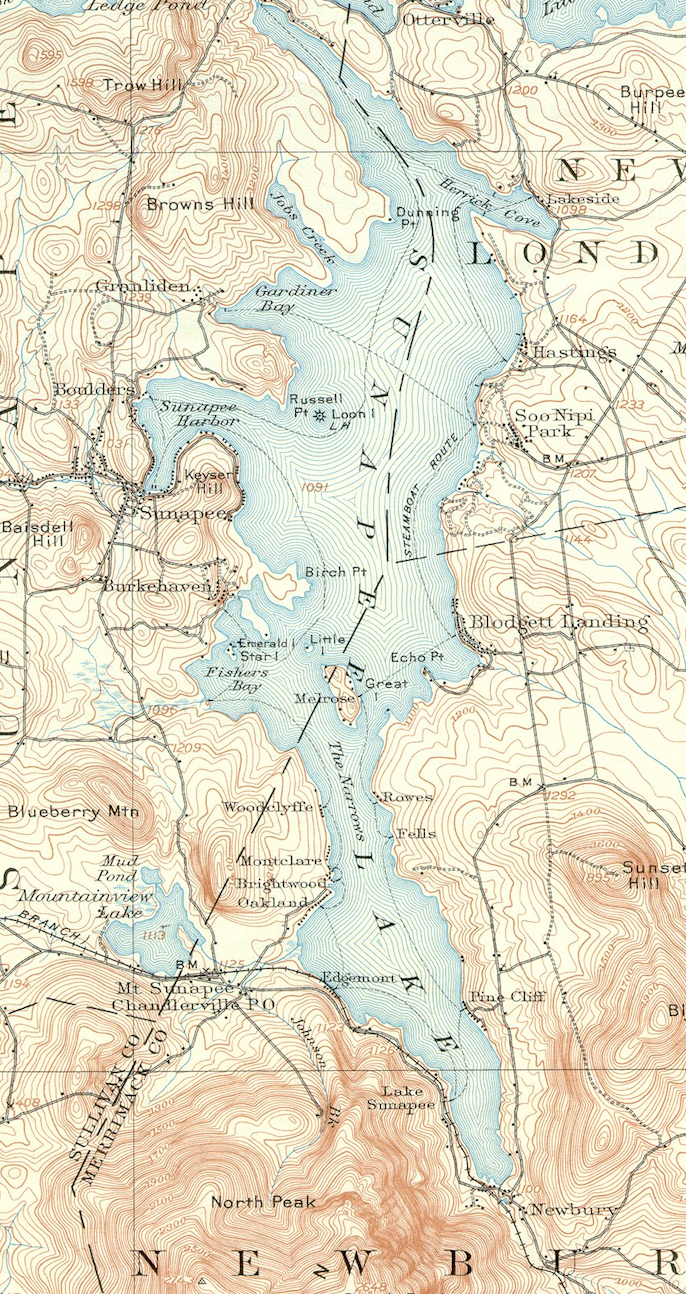
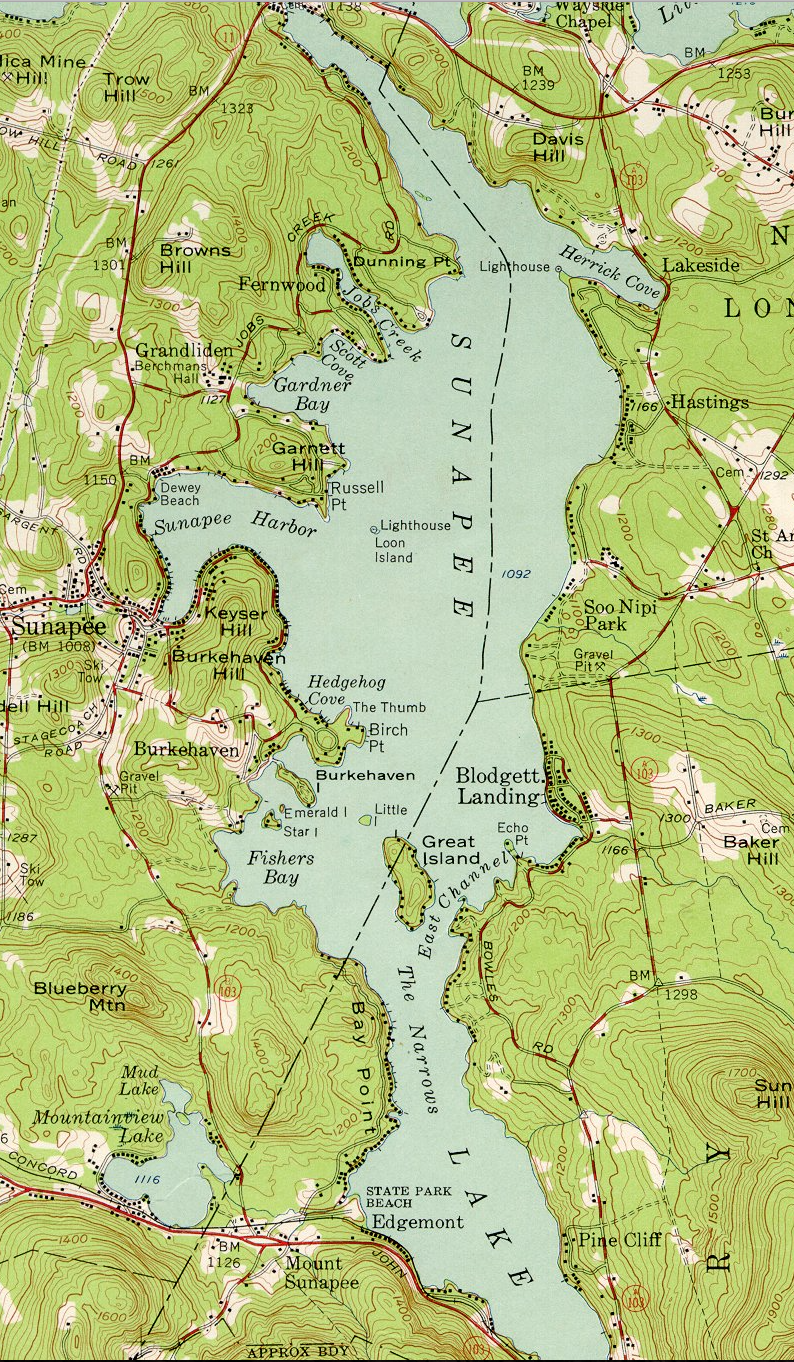
Lake Sunapee has changed dramatically over the past 400 years but the greatest changes are the result of transitions in transportation. In the late 1800s the implementation of the Boston and Maine Railroad station at Sunapee opened up significant advertising for the landscape. Access was further expanded with the addition of steamships in the early 1900s, expanding the spatial structure of the lake. The real accelerant to Lake access was the invention of the automobile and the ultimate expansion of cars to every home in the 19th century. The automobile made Lake Sunapee accessible to millions of families and moved Lake Sunapee from a tourist landscape to a landscape based around second homes as a wealthy retreat mechanism from surrounding cities. Although Lake Sunapee will continue to transition, one thing that has not changed is the beauty and uniqueness of Lake Sunapee. Like the Algonquin Indians 400 years ago, families still walk the shores of Lake Sunapee to experience the crystal clear water, fresh and clean air, towering pines, and majestic mountains. Lake Sunapee is a special place. It is the place I call home.
Cover Image: Image Credit: Sunapee Historical Society
Cortland Begor is a Dartmouth senior graduating in June of 2018, majoring in enviormental studies and grew up on Lake Sunapee.
Sweetser M “South Western New Hampshire” Boston and Maine Railroad (1891). ↩
Mitchell M Richard “Sunapee Steamers.” In New Hampshire Profiles Magazine (August, 1962). http://johngreenwood.net/Sunapee-History/Sunapee_Steamers_NH_Profiles_Aug_1962.pdf ↩ ↩ ↩ ↩
Brown Donna “Inventing New England Regional Tourism in The Nineteenth Century” Smithsonian Institution Press (1995): 74. ↩ ↩
Morse E Cheryl “Performing a New England Landscape: Viewing, engaging and Belonging.” University of Vermont (October, 2014): 229. ↩ ↩
O’Connell James, “The Evolution of Twentieth-Century Boston’s Metropolitan Landscape.” In A Landscape History of New England, (2011): 344. ↩
Todahl-Blokhine A Margery, “Farewell to Lake Sunapee.” In New Hampshire Profiles Magazine (August, 1971): 28-32. http://johngreenwood.net/Sunapee-History/Farewell_to_Lake_Sunapee_NH_Profiles_Aug1971.pdf ↩
“Sunapee Players to Open Season in Century-Old Barn.” New York Herald Tribune (July 8, 1934). https://search-proquest-com.dartmouth.idm.oclc.org/docview/1114840610?accountid=10422. ↩ ↩ ↩
“Summer Resorts: Railroad Manuals” Boston and Maine Railroad (1896). ↩
“The Dartmouth-Lake Sunapee region of New Hampshire for a home, vacation, industry” Dartmouth-Lake Sunapee Regional Association (1942). ↩ ↩
“Sunapee Season Begins” New York Times (June 28, 1936). https://search-proquest-com.dartmouth.idm.oclc.org/docview/101857706?accountid=10422. ↩
“Forest Reserve of 946 Acres Set Aside Near Lake Sunapee: Sunset Glow” The Christian Science Monitor (July 29, 1925). ↩ ↩ ↩
“Things To Do in Sunapee: Diving to the Wreck of the Weetamoo” The Governor Francis Parnell Murphy Museum and Historical Archive Filmed [September 2014] YouTube Video, 6:36 Posted [September 2014]. https://www.youtube.com/watch?time_continue=138&v=f8b48Ujryl8 ↩
Candidus, Shelly “Capturing the Spirit of Blodgett’s Landing” SooNipi Magazine (July, 1998). ↩ ↩ ↩
“At Lake Sunapee” New York Times* (August 9, 1936). https://search-proquest-com.dartmouth.idm.oclc.org/docview/101790920?accountid=10422. ↩
Interview with Kathleen Cavanaugh. Interview. (November 6, 2017) ↩ ↩ ↩
Ryden C Kent, “Big Trees, Back Yards, and The Borders of Nature” Michigan Quarterly Review, (2001): 126-139. ↩
“New England Prepares for Prolonged Vacation Season” The Christian Science Monitor (Aug 03, 1923). https://search-proquest-com.dartmouth.idm.oclc.org/docview/510769301?accountid=10422. ↩
Russell, Frederick “Summer Motoring in New England” New York Times (August 15, 1926). ↩
“New Golf Course Added Attraction for Lake Sunapee: Several” The New York Herald Tribune (June 8, 1924). ↩