The Saint-Gaudens National Historic Site resides on a hillside in the small, quaint town of Cornish, New Hampshire. The site was home to the incredibly famous sculptor Augustus Saint-Gaudens and preserves his home, studios, and gardens while also maintaining many natural features such as a pond and a forest trail. There are many similarities and different things to learn from landscapes across New England, but this particular landscape in Sullivan County, New Hampshire is intriguing because it holds such a rich and unique history. Examining the ways in which the Upper Valley Community interacts with this landscape, both consciously and subconsciously, can be telling of the significance of the place. There is a very distinct relationship between a landscape and people’s relationship with it that can serve to prove that people can become significantly attached to a place and its culture whether they realize it or not, all through the land itself. The following sections will work to provide evidence that such a relationship exists.
Before his passing in 1907, Augustus Saint-Gaudens took exceptional care of his estate by doing things like installing formal gardens. Thus, after his death, the treatment and overall appearance of the grounds were of immediate concern. How did the grounds appear the years following its acquisition by the National Park Service in 1965? In late 1965, the National Park Service (NPS) created a plan for the Saint-Gaudens Site. An examination of this plan reveals the condition of the landscape at this particular time, and also shows that the NPS was committed to preservation of the site in its original form to some extent. The paper reports that the park currently obtained 1/4 of an acre of formal garden, two acres of lawn, and more than twenty acres of woodlands and field. It also discusses how the open land before Aspet, which was the actual house in which Saint-Gaudens lived, was maintained by a local farmer who “maintains its open character”. 1 The gardens behind the house were beautifully kept and adequately showcased Saint-Gaudens historical work and his connection to his land.
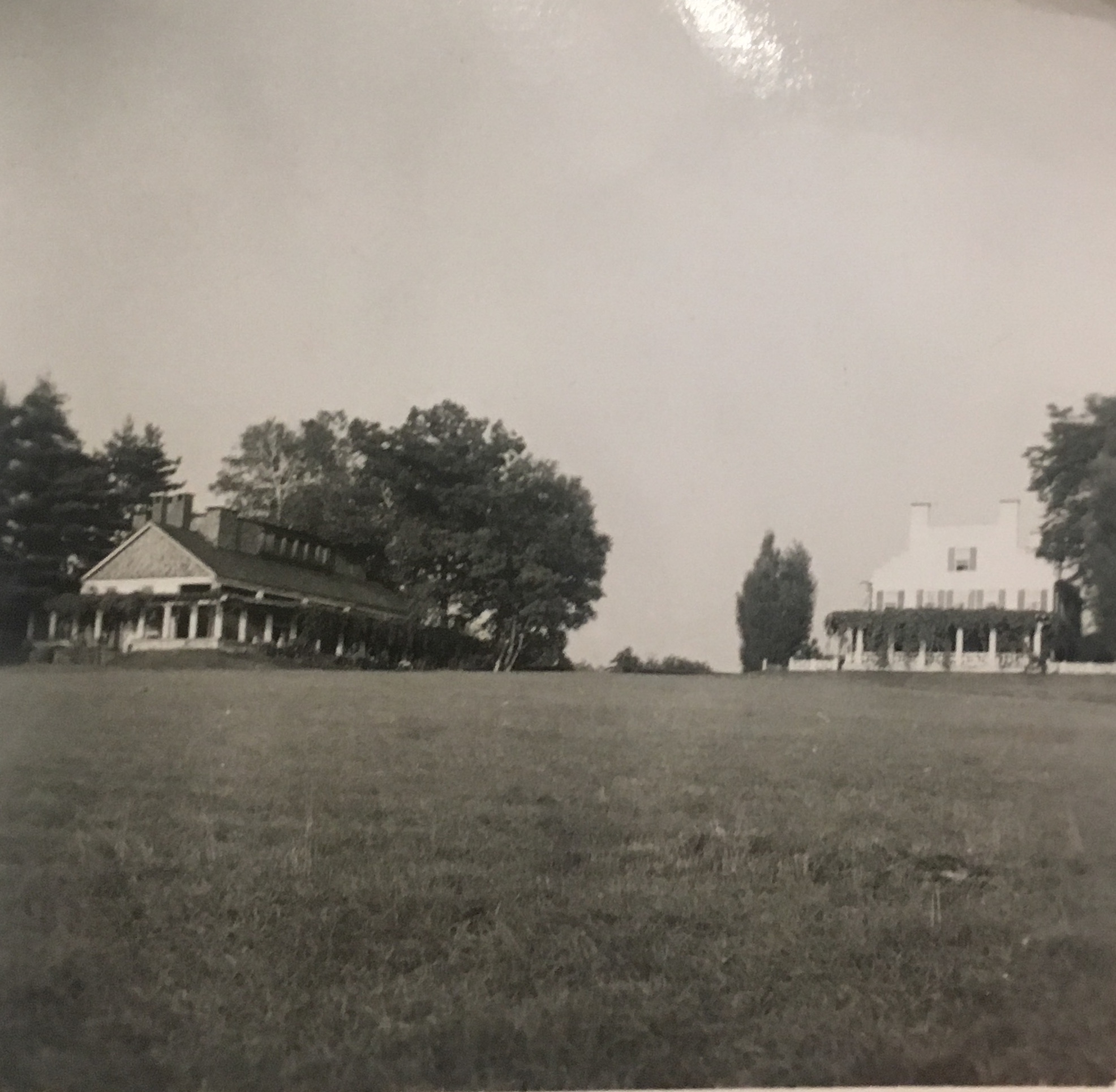
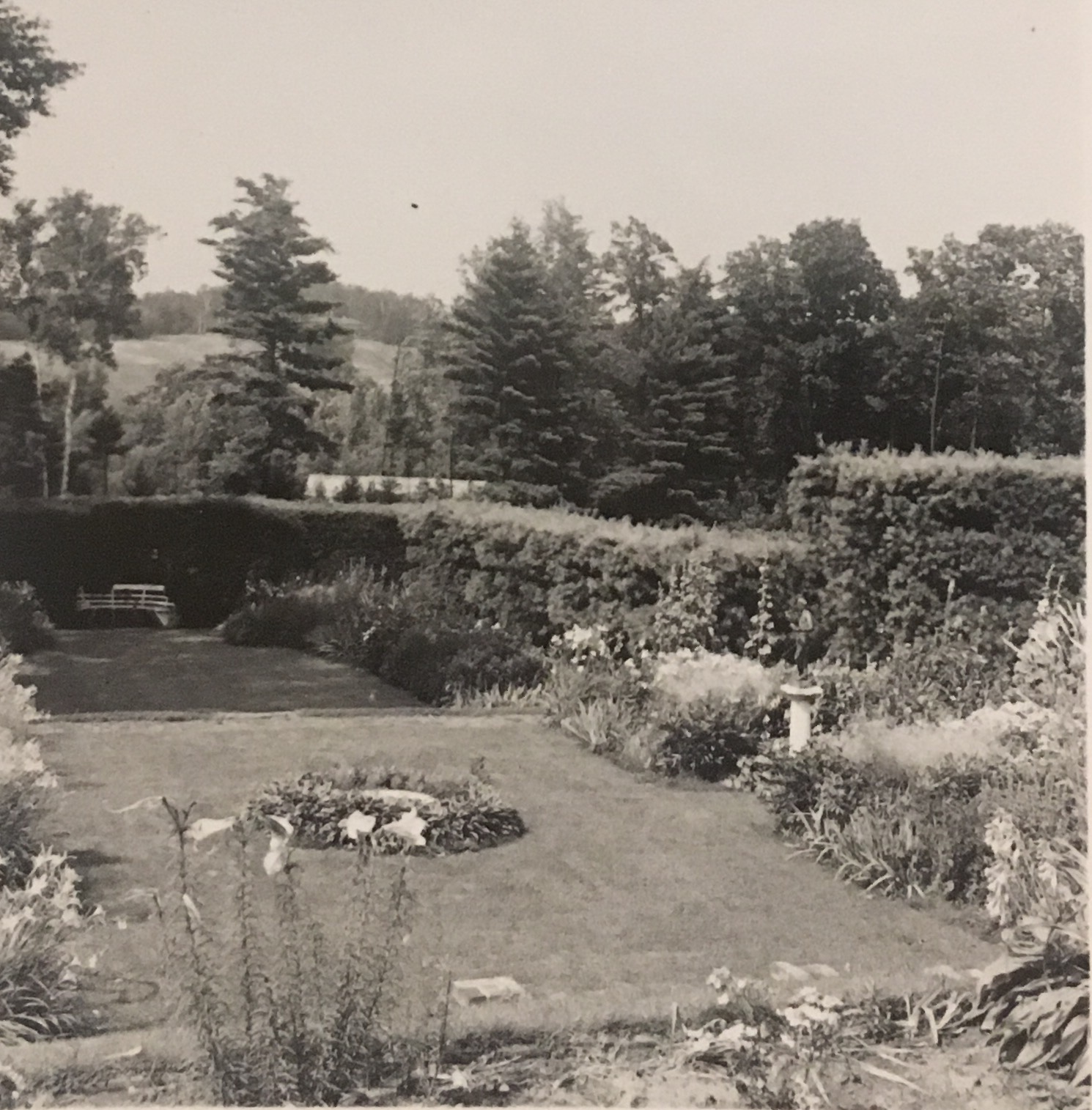
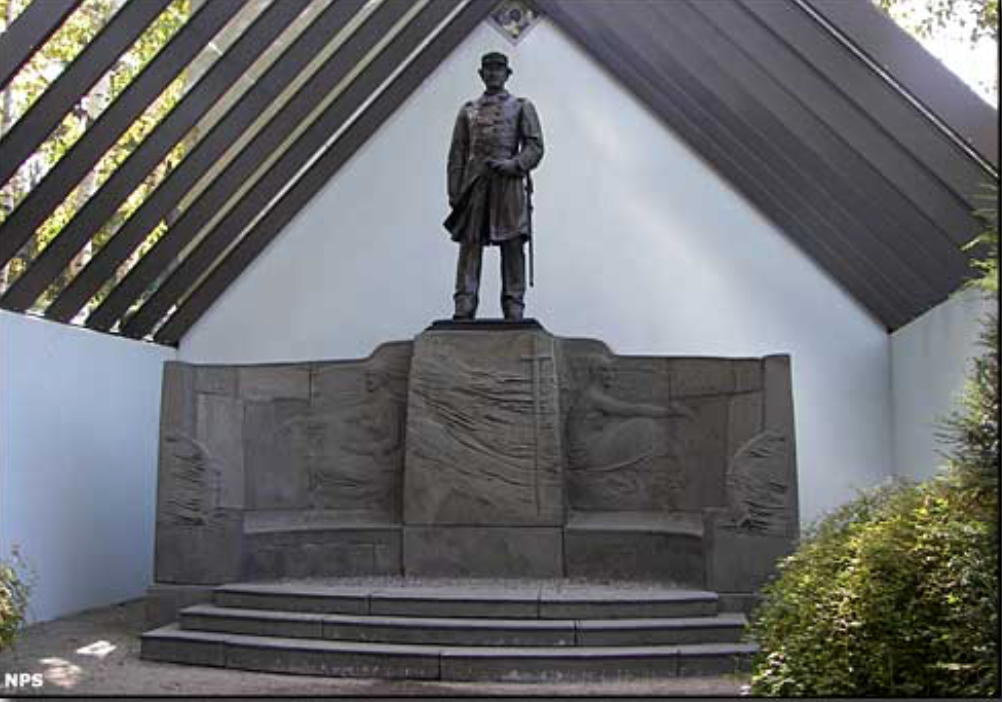
The earliest accessible report on land management of the site is from the year 1995: “The Great Management Plan/Development Concept Plan/Environmental Impact Statement: Saint-Gaudens National Historic Site.” The paper served as a guide for land management of the park for up to 15 years, but analyzing the existing conditions and problems of the landscape that are discussed show how well - or not so well - the park had been maintained the years prior to 1995. One problem with the site’s current condition by 1995 was the fact that it lacked a central place that visitors could be oriented to for information/orientation, ticketing, etc. Because of this, Aspect contained a plethora of things such as staff offices, a library, storage, etc. and on top of all of that was also used to greet the public because of inadequate visitor facilities. This led to a high concentration of people in the building and the area surrounding it, ultimately negatively impacting the fragile gardens and grounds and resulting in wear on the historic fabric of the home.2 Another main problem that the paper points out is that at this time two major pieces of art - the Shaw Memorial and the Farragut Monument are exhibited outdoors thus having no protection against extreme weather conditions. While the site was certainly functioning between the years 1960 and 1993 and was federally managed in such a way that conservation of the landscape was a priority, the management was falling short of meeting this goal in a few different areas.
This section will analyze the cultural aspects of the park and focus on how the people of not only Cornish, but the entire Upper Valley of New Hampshire and Vermont valued the historic site between the years 1960 and 1993 before any major landscape changes were underway.
What did the park mean to the inhabitants of the Upper Valley in the latter half of the 20th century? What appears to have been the most popular news source for the Upper Connecticut River Valley since the 1900’s is the newspaper titled Valley News. This paper covers news across the entire Upper Valley, seven days a week. After analyzing months of issues of the Valley News between the years 1962-1993, I was stunned with the amount of coverage regarding Saint-Gaudens National Historic Site. Given the fact that the site was deemed a National Historic Landmark in 1962 I expected to find several stories covering it within this timeframe. Not only were there no stories to be found about the park, but there was not even a single advertisment attempting to allure citizens to the site. However, there was a lack of any mention of any national historic landmarks within the Upper Valley. This shows that there must have been a very low importance put on not only the Saint-Gaudens site but also all other landmarks within the area in general. While the lack of advertisement certainly makes one think that whoever oversaw the site must not have held enough pride in it to make efforts to attract people from surrounding areas, it could also possibly serve as evidence that the landmark did not make enough money to provide funding for advertisements.
But do the people’s efforts towards land management and conservation tell a different story? Before the site of Augustus Saint Gaudens’ home and studios became a national historic landmark, it was incorporated into a memorial for the artist by a group of several citizens called the Trustees. The Trustees had complete control of the site until it was donated to the United States for public ownership in 1964. Under the control of the Trustees, the memorial served to protect and conserve the site and its art collection. The group strongly cared for the preservation of the site and educating children and the general public about the work of Saint-Gaudens.3 Even though the National Park Service has been in charge of maintenance and management of the site since 1965, the Memorial remained an organization ran by individual contributions from local citizens. Thus, this evidence allows us to assert that the public cared quite strongly for the preservation and upkeep of Saint-Gaudens National Historic Site. While the public could have cut all ties with the site after it was handed over to the United States and the NPS, they remained intimately involved showing that they truly valued the site and the significance it held for their community. In fact, the only reason it was donated to the United States for public ownership was in hopes that it would be better managed.3 The Trustees managed to maintain the landscape and its character fairly well for nearly 60 years after the passing of Augustus Saint-Gaudens.1
Certainly, support for the site could have been more prevalent within the newspapers circulating the Upper Valley but after examining the involvement of the people of the area for the protection and conservation of the art collection and landscape, it’s safe to conclude that the Upper Connecticut River Valley appreciated the estate to some extent.
In September of 2004, an assesment was published on Saint-Gaudens National Historic Site. According to the assessment, between the years 1995 and 2004, object conservators from the NPS, Northeast Museum Services Center, Collections Conservation Branch (CCB) provided treatment for over 150 pieces of art displayed within the site. These treatments included “application of protective coatings on outdoor bronze scultpure and cosmetic and structural repairs on plaster sculpture and reliefs exhibited at the park.”4 However, a large problem that appears to have been holding the site back from improved land management and maintenance in 2004 was the extreme lack of funding. In the park’s 2008-2012 strategic plan, provided by the National Park Service website, it was reported that out of the 47 historic structures at the site, 30 of them were in good condition at the end of 2007.5 This was only achieved by utilizing the majority of the park’s budget for historic structures. Within the plan, the National Park Service stated that the current condition of the cultural landscape was good. While there are always more improvements to be made (especially to such a large historic site such as this one), this shows an enhancement from the previous conditions of the landscape outlined in the previously mentioned land management report of 1995. In 2008, the park had partnerships with the following: Trustees of the Saint-Gaudens Memorial, Inc., Connecticut River Joint Commissions,Inc., Cornish, New Hampshire Fire Department and the Student Conservation Association.5 These partnerships are important to note because they enhance the parks ability to manage resources effectively.
A comparison of the two pictures below exhibits how maintenance of the historic structures in the site has drastically improved since the mid-to-late 1900’s. The photo taken during the 1960’s shows the structure being completely exposed to nature and all possible weather conditions. The other photo, which is much more recent and most likely taken within the last 5 years, shows the Farragut Memorial under its very own structure that can be easily modified during certain extreme weather conditions to help protect the memorial. 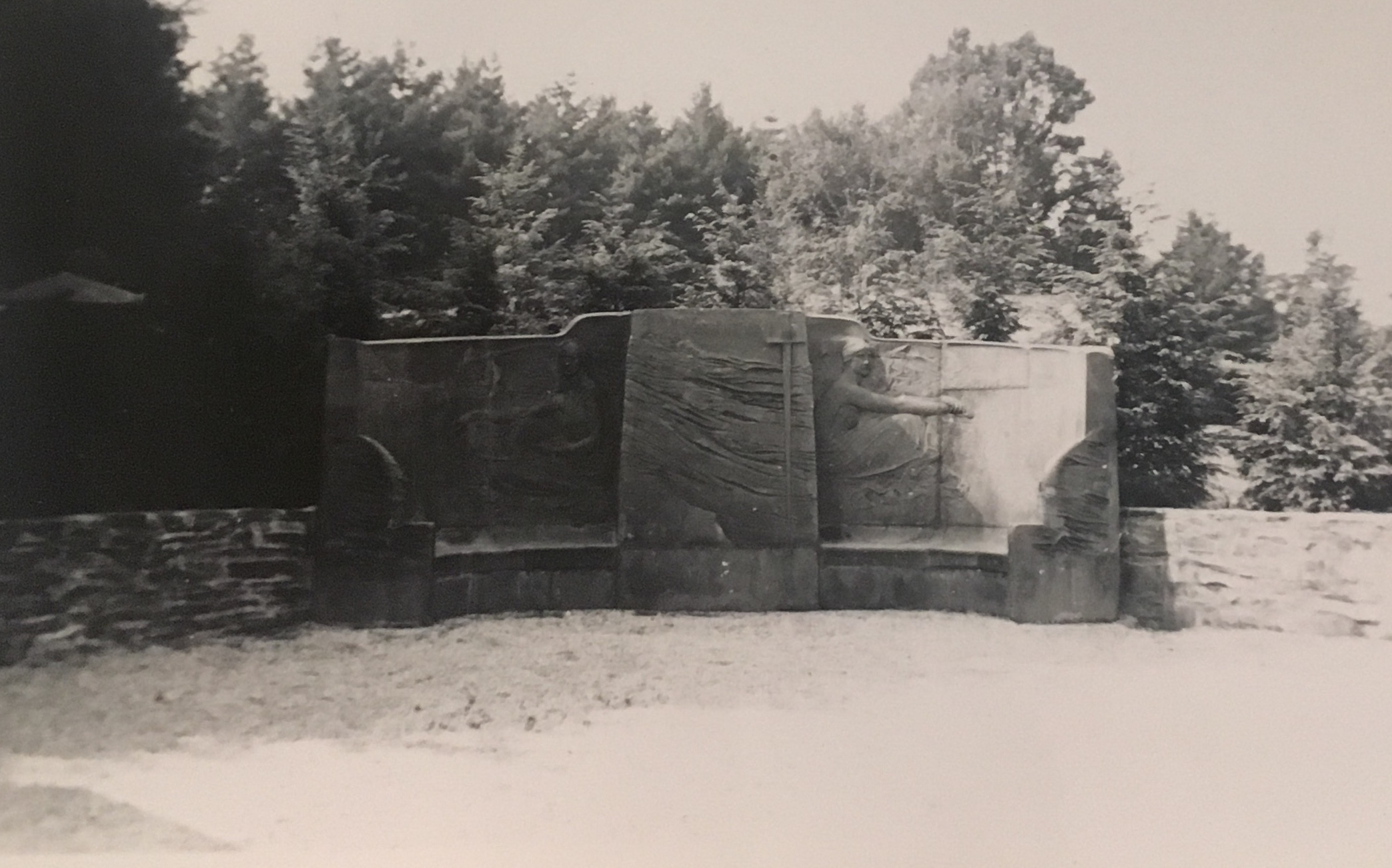
The following map is a map of the Saint-Gaudens National Historic Site as illustrated in the park brochure which was last updated in August of 2016. You’ll notice a numbered list off to the side of the particular spots of importance within the park, and number 10 maps out the Visitor Center. A large problem that existed during the late 1900’s and was mentioned in the section titled Land Management of Saint-Gaudens National Historic Site (1960-1993) was the lack of adequate visitor facilities. As this map illustrates, as of today this problem has been resolved. 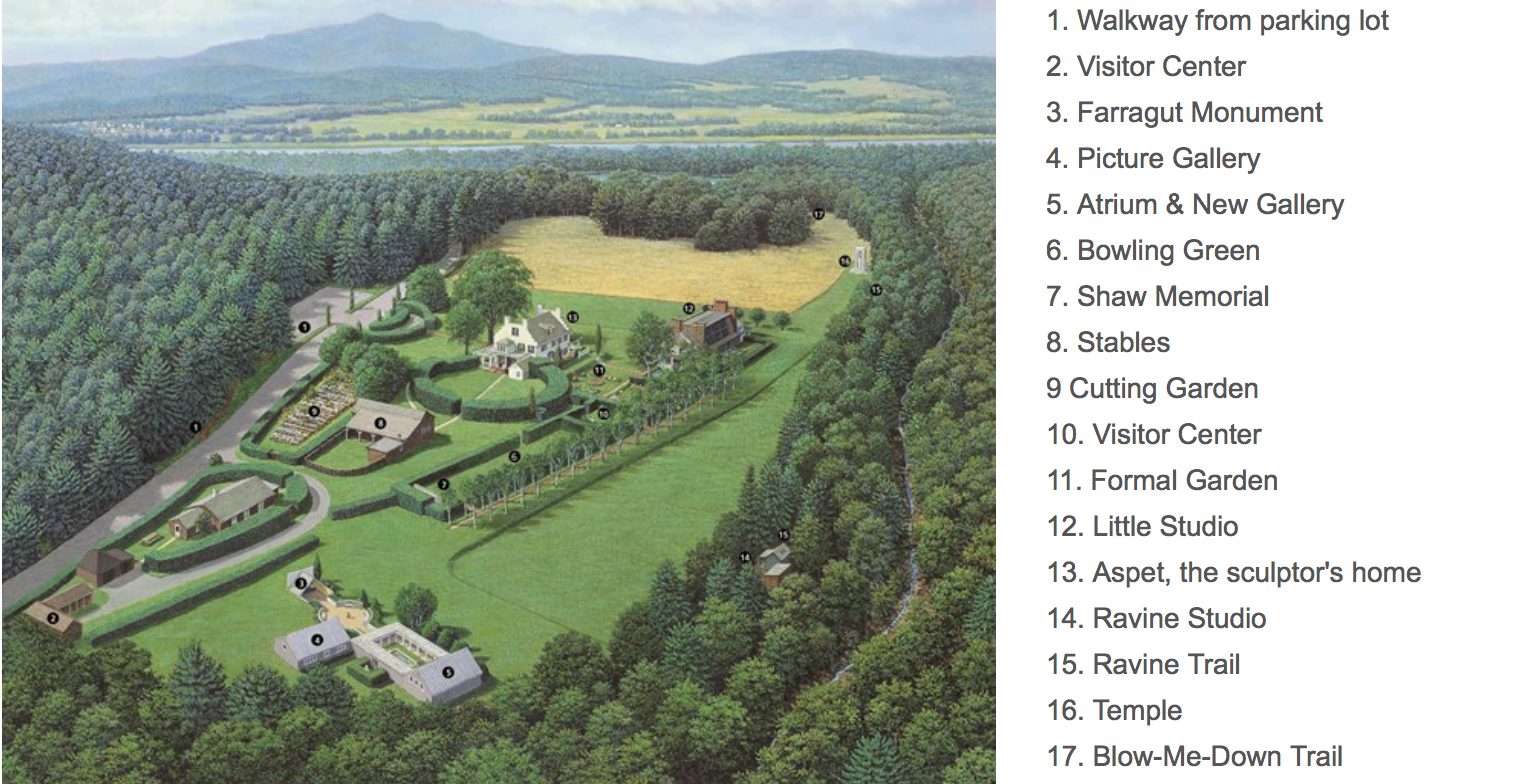
Since 1995, the landscape of the Saint-Gaudens National Historic Site has undergone many positive changes as previously discussed. But what about the community’s attitude towards the park and their relationship with it? Have these things shifted alongside these landscape changes?
Beginnning in the mid 1900’s the Trustees made it their goal to positively interact and conserve the site. This involvement has only increased in recent years as they have “continued to support the park in many ways, including sponsoring art exhibitions and concerts and providing funds for the conservation and acquistion of art works.”4 Lots of support for these summer concerts are prevalent in news articles between 1995 and 2017. For example, a news article published in 2010 titled, “Weekend Getaway: Saint-Gaudens National Historic Site” vividly describes Saint-Gaudens National Historic Site as a perfect place to visit to relax and have an enjoyable time. The author urges the reader to visit during the summer because “Sunday afternoons in the summer yield a series of concerts sponsored by the Saint-Gaudens Memorial, following a tradition of Saint-Gaudens himself, who held concerts in his studio.”6 The fact that one of the most valued events the site puts on is organized by the people of the Upper Valley themselves shows us how not only the citizens benefit from the landscape, but how the site also benefits from the citizens.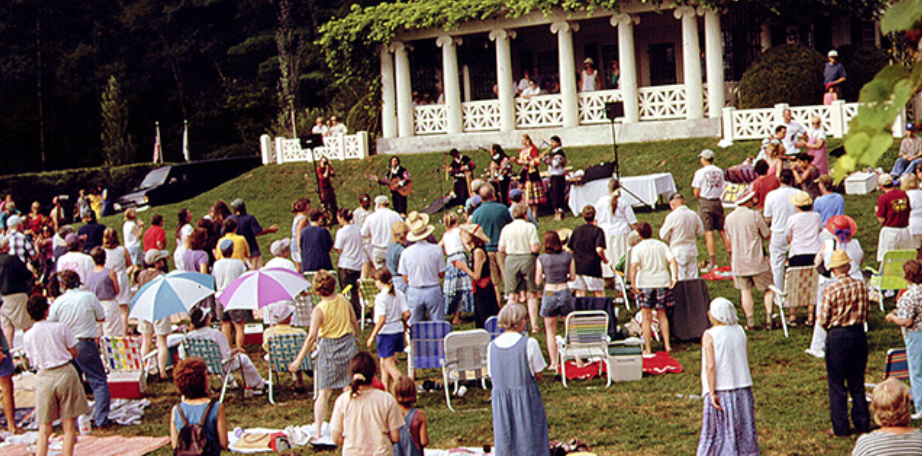
In 2001, an organization called the Friends of the Saint-Gaudens Memorial was created that serves to assist the site and the Trustees in numerous ways including sponsoring special programs and improving park facilities. In fact, on the Saint-Gaudens Memorial’s offcial website anyone can become a “friend” and purchase a membership that includes many different perks such as special benefits and helps support different things related to the park.7 Support for the site has obviously increased tremendously compared to years prior to 1995. Residents in Cornish felt so strongly towards the landscape that they fought against the National Park Service in 2009 in attempts to preserve the historic site’s trees. This was such a big deal for the area that Valley News decided to publish a story covering the issue. Within the news article, several Cornish residents are quoted expressing their anger about a tree-cutting project at Saint-Gaudens National Historic Site. One of the residents expressed his concern by stating that, “I don’t want to see [the trees] cut. They’re a big, beautiful part of Saint-Gaudens.”8 The uproar from the citizens was so overwhelming that it led the NPS to suspend the project.
Even though the evidence that I have displayed has shown that residents of the Upper Valley have always, to some extent, interacted with the land at the park and worked to preserve and improve it, this interaction between the people and the land has increased for the better since 1995. Alongside this improvement of the importance of the site, the park’s facilities as well as its overall landscape have seen major development. Thus, there is clearly a correlation between positive landscape changes and positive reinforcement of a place’s significance. When the park lacked efficient land management, residents tried to work towards conservation but lacked a significant amount of overall support for the park. But when the park began to exhibit proper maintenance, support for the site began to flourish. The relationship between the landscape of a National Historic Site and its significance to nearby residents is one that displays how important land management of an area is to its overall value. Whether or not people shifting their attitudes about Saint-Gaudens National Historic Site after the improvement of the landscape was intentional is unknown. But one thing is certain: people interact in a way with a landscape that directly reflects how the landscape is taken care of and governed.
Cover Image Source: Flower Garden and Aspet House National Park Service. Accessed November 2, 2017. https://www.nps.gov/media/photo/gallery.htm?id=FA8E7B5D-155D-451F-679B143C9624061C
Pressley, Marion, and Cynthia Zaitzevsky. Cultural landscape report for Saint-Gaudens National Historic Site Vol. 1. Boston: National Park Service, North Atlantic Region, Division of Cultural Management, Cultural Landscape Program, 1993: 140-156. ↩ ↩
Saint Gaudens National Historic Site, New Hampshire: general management plan, development concept plan, environmental impact statement Denver, CO: United States Department of the Interior, National Park Service, Denver Service Center, 1996. Accessed Nov., 2017. ↩
“History.” The Saint-Gaudens Memorial. Accessed November 1, 2017. http://sgnhs.org/sgm-history/. ↩ ↩
Meyers, Elizabeth. Saint-Gaudens National Historic Site: a resource assessment Washington, Dc: National Parks Conservation Association, 2004. ↩ ↩
“Park 2008-2012 Strategic Plan” Saint-Gaudens National Historic Site New Hampshire http://nps.gov ↩ ↩
Seyfriend, Kathrine. “Saint-Gaudens National Historic Site.” Weekend Getaway: Saint-Gaudens National Historic Site | Saint-Gaudens | Oh, Ranger! Accessed November 1, 2017. http://www.ohranger.com/ ↩
“The Saint-Gaudens Memorial.” The Saint-Gaudens Memorial. Accessed November 5, 2017. http://sgnhs.org/. ↩
Yager, Bret. “In Cornish, Disputed Views.” Valley News Dec 11,2009. http://search-proquest-com.dartmouth.idm.oclc.org/docview/378717875?accountid=10422. Cover Image: https://www.nps.gov/saga/planyourvisit/maps.htm ↩