As Ann Wetzel states, “an important feature in any town is the recreation offered to its residents”1, and to residents of South Burlington, Vermont recreation is highly prioritized. This desire for the outdoors has manifested itself deeply within the local parks in the Burlington area and Red Rocks is no exception to that. Red Rocks Park is a beautiful 100-acre park on the bank of Lake Champlain and ever since the park’s introduction to the public in 1971 it has become home to many of Vermont’s favorite recreational activities, such as hiking, biking, swimming and cross-country skiing.2 However, Red Rocks transformation into a recreational hotspot has not been so celebrated as its current status may give off and in fact it has been met with increasing concerns from local residents and town officials for preservation and conservation of the land.
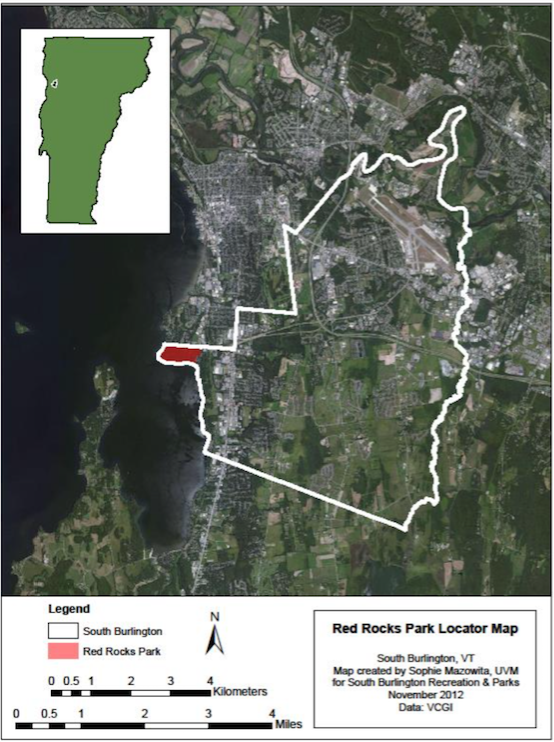
The essence of my project is inspired by Lilian Carisle’s reference to a description of Red Rocks park in 1905 as the “gem of the lakeshore.”3 Carisle used this old representation of Red Rocks in 1905 to refer to the park in 1975, because in 1975 the park promised to remain a haven of natural beauty in the fast-growing urban area for generations to come. This description of Red Rocks is very reminiscent of Kent Ryden’s depiction of nature as “non-human in its content, origins and meaning”, 4 because it describes nature as this completely separate entity from the “culture” of the human world. However, since 1975 and even dating all the way back to the late 19th century, the park’s land has continued to be transformed by the human touch. Thus, as I have already stated above, the transformation in the land, especially since 1971, has been met with increasing resistance from local residents as well as conservationists from groups, such as the South Burlington Recreation and Parks Department, who are concerned about the negative effects these uses of the land have on the land. Therefore, my project aims to answer the question: does Red Rocks Park still exist as the “gem of the lakeshore”? I will conclude that, despite the land’s changes and the subsequent struggle between conservationists and recreational users over the land, Red Rocks still very much exists as a “gem of the lakeshore.”
In answering this question, I will use the year, 1971, as my project’s pivotal point when the land was bought from the Hatch family and consequently transformed from a private estate into a public park. However, I will first begin with an early, environmental history of the park as the Hatch estate from 1866 to 1970. I will then describe the rise of urban consumption that the park experienceed from 1970 to the current day as seen through the rise of recreation that occurred in the park. Next, I will conduct another historical mapping of the park from 1970 to the current day, but I will focus instead on people’s increased focus on preservation of the land. Lastly, I will focus on recent management plans about the park in order to show how the creation of these plans have reflected the unification of the forces of recreation and conservation. I hope to prove that the unification of these forces, as seen through the plan’s language and strategies, shows that while the ways people interact with the nature has drastically changed since 1971, the beauty and elegance of this land lives on through these residents’ combined efforts to wisely consume this land in order to preserve that nature for generations to come.
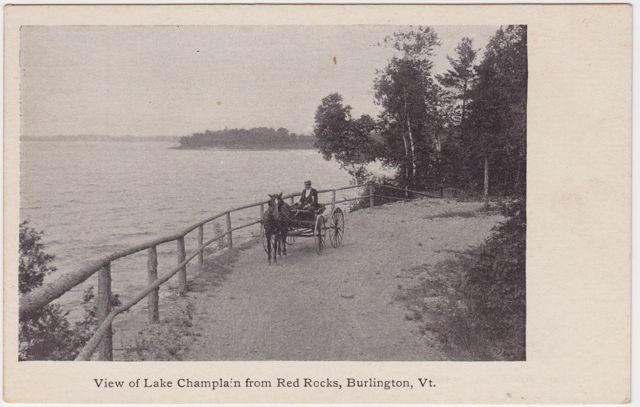
Although the history of this land dates all the way back to 1789 when Thomas Udell first settled there, the pertinent history of the park for this project begins in 1866. 5 In 1866, Edward Hatch, a wealthy businessman born in Vermont, purchased part of this beautiful land on the historic shores of Lake Champlain from the Harrington family and by 1891 the entire track of land was in his possession. 6 Despite gaining most of his success in the metropolis of New York City, Edward Hatch never lost his love for Vermont and in 1893, as the Burlington Free Press states, Hatch enlisted Charles A. Murray to oversee “improvements” on the Red Rocks property.7 The land, largely kept in its natural state to this point, was soon transformed in order to reflect Hatch and his family’s appreciation for this nature. These “improvements” consisted of the construction of a comprehensive system of roads to various vantage points in the park as well as a lookout house on the Western side of the park overlooking Lake Champlain.8
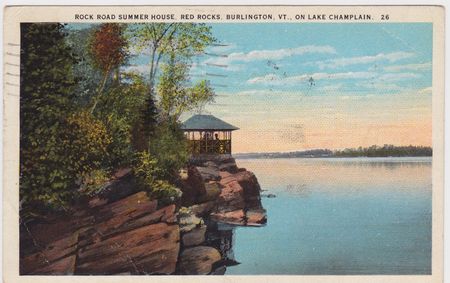
In order to build these roads and this cottage, Hatch had some of the forest removed as well as some of the land’s rock face blasted with dynamite.9 By creating these roads, Hatch remodeled this landscape from its prior existence as this natural, untouched land to a more manicured landscape conducive to his desire to appreciate the nature up-close. This land soon served as a backyard for Hatch’s family as well as other residents of South Burlington who wanted to travel along these roads and take in the beauty of this land.10 However, despite these initial changes to the land, after Hatch’s death in 1909, the Hatch family ceased to continue making changes to the land.11 The land was still visited by residents of the town and the Hatch family, but upkeep of the park’s roads became very poor and there were no further additions made to the land. In 1970, the park, facing growing interest from residents and town officials to utilize the land for residential and industrial development, was purchased by the town in order to protect the land from being developed.12
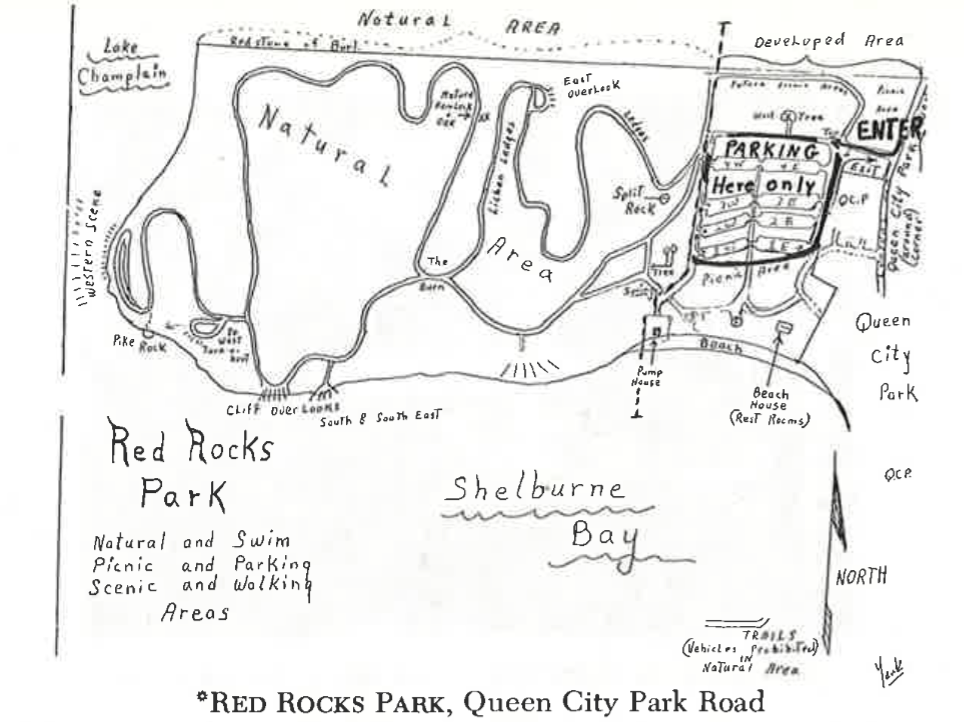
As I stated in my introduction, the year 1970 was a decisive moment in the park’s history, because the moment the land became public was the exact moment at which the land began the process of transforming into a recreational hotspot. Before 1970 the land was only used by a select number of people for the purpose of walking and riding along the paths and there were no other ways that people consumed the nature. However, once the park became public property the wheels were put into motion in order to restructure this land to provide year-round enjoyment to area residents. The park’s recreation can be succinctly divided into three big sections of the park; the forest, which became to activities such as hiking, biking and cross-country skiing; the beach, which became home to activities such as swimming and kayaking; and the cliffs, which became home to activities such as cliff-jumping.
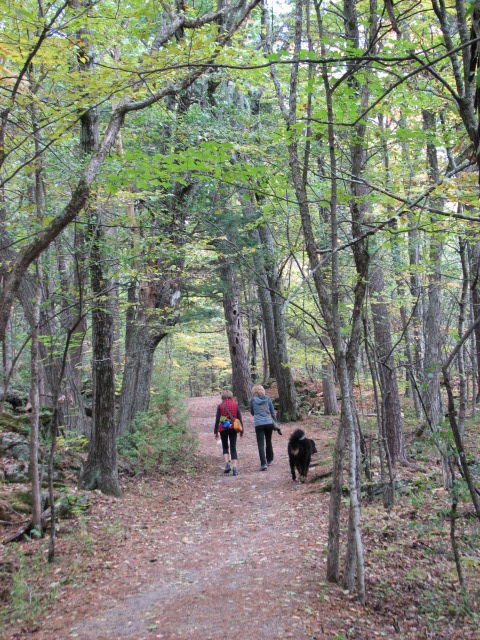
When the town acquired this land in 1970, many of the trails and roads that originally been built in the 1890s per Hatch’s orders had been poorly maintained and neglected. Thus, the town began rebuilding and cleaning up these trails in order to prepare for the influx of people that would now utilize this land. Soon, the park consisted of roughly 3.3 miles of beautiful hiking trails that exist to this very day looping through the hemlock and pine forests and emerging onto the rocky shoreline, where there are spectacular views of Lake Champlain, Shelburne Bay and the Adirondacks.13 One visitor to the park, Mike, reflected on his experience there by saying, “The trails are not difficult to walk and it is a relaxing and refreshing way to enjoy being outside and getting exercise. It is a treasure in Burlington.”14 Many visitors to the park echo Mike’s view and applaud not only the park officials’ fine job in maintaining the trails but also praise the trails’ abilities to bring them closer to this beautiful nature. Along these trails there have also been numerous benches constructed in order to provide convenient locations for visitors to eat and just relax during and after their activities are over.15 In addition, these trails’ usages don’t go obsolete in the colder and snowier months, as they actually become popular locations for cross-country skiing.
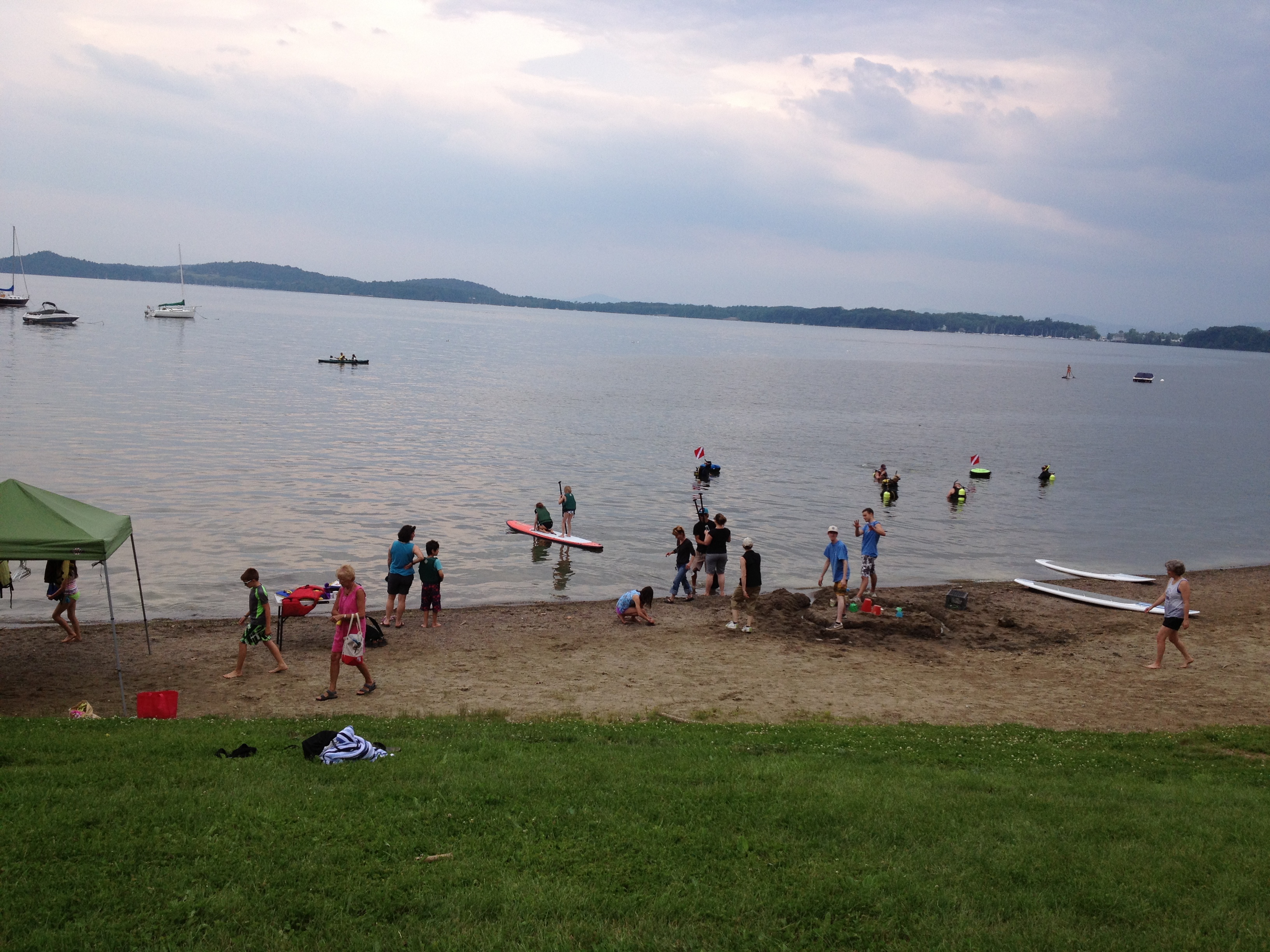
The park is also home to the only public beach access in South Burlington, consisting of a 200-foot stretch of waterfront at the southeastern corner of the park.16 The sand beach has a designated swimming area as well as multiple restrooms and changing areas that visitors can use. Steven, a visitor to the park, described the beach as a “nice little beach to hang out on…you can walk along the rocks out into the water and have a perfect view of the lake and the mountains as the sun sets behind them.”17 As clear by Steven’s statement above, not only does the park’s beach provide a charming little spot to swim and relax with your friends but it also provides yet another amazing vantage point in which to appreciate the Vermont landscape.
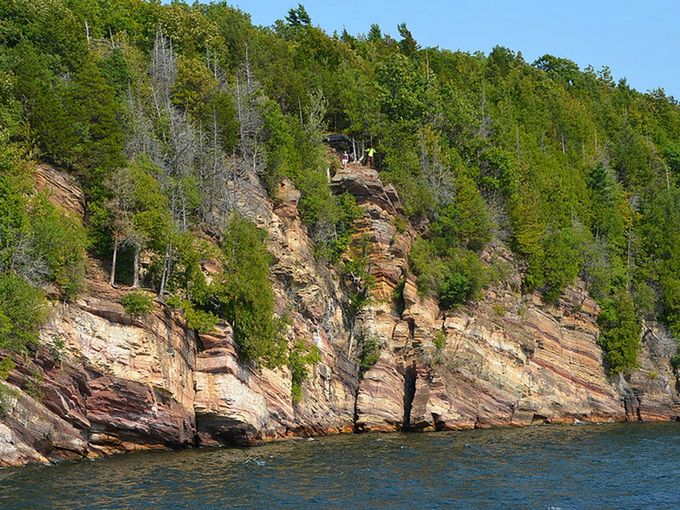
Lastly, the park also has hundreds of feet of exposed cliffs that provide ideal locations for cliff jumping. There are many various ledges that people can jump off of ranging from a 20-foot jump to a 76-foot jump. Unlike the beach and the forest, this part of the park is not officially advertised by park officials, since the town of Burlington does not condone this activity due to its safety risks, and in fact as recently as June 2017 a $1000 fine has been instituted for people who get caught jumping off these cliffs.18 Nevertheless, though, these cliffs are visited every day in the summer and they provide an essential part of this park’s recreation. One visitor, coming all the way from New Jersey, documented his appreciation of these cliffs before he jumped: “We looked out over a vast lake with shorelines covered in thick forest and tall, red cliff faces. A sailboat silently slipped off towards the quickly fading sunset of gray and pink. The time exploring spots like these with friends and family remains irreplaceable.” 19
Before 1970 there were no real visible concerns about the environmental impact of the human footprint on the park, since the land was still privately owned by the Hatch family and his family only used the land in a minimal capacity since his death in 1909. However, once the park was purchased by the town of Burlington and the many forms of public recreation began to take hold in the park, various town officials and groups, such as the South Burlington Parks & Recreation Department, began to express concern over the environmental impacts occurring on the land. These people brought up environmental concerns which they believed threatened the ecology and overall health of the land ranging from off-leash dog impacts to overall trail usage. Their concerns and their emphasis on the conservation of Red Rocks was inspired by their belief that the increase in recreation was destroying the land’s natural beauty.
The issue of dogs at Red Rocks has been a heated issue especially since Red Rocks offers a plethora of beautiful trails for people to come and walk their dogs on. The issue stems from the fact that South Burlington dog laws are laxer than Burlington dog laws – owners in Burlington have to keep their dog on a leash while owners in South Burlington just have to have the dogs in their line of sight – and these liberal laws are driving more and more people to bring their dogs to parks in South Burlington such as Red Rocks.20 The concerns are thus not only that the dogs are disrupting wildlife communities by being able to run freely but also that the increase in dogs there have led to more poop being left on the ground, which some park visitors claim is ruining the aesthetics of the park.21 Putting blame on the inability of dog owners to take care of their pets, Diana Bacon, a frequent visitor of Red Rocks, stated in 1999 that, “Also, there’s a lot of poop out there. People aren’t being conscientious about picking up after themselves.”22 Along with this environmental concern, park visitors have also expressed concerns over “unofficial” usage of park trails. Park officials are concerned about people creating their own unofficial trails throughout the park which they believe threatens the ecological integrity of Red Rocks.23 Members of the Red Rocks Committee, which is the main group that oversees the management of the park, believe that the increase in unofficial trails threatens wildlife habitats in the park and is thus creating too much of a dominant human presence in the area. 24
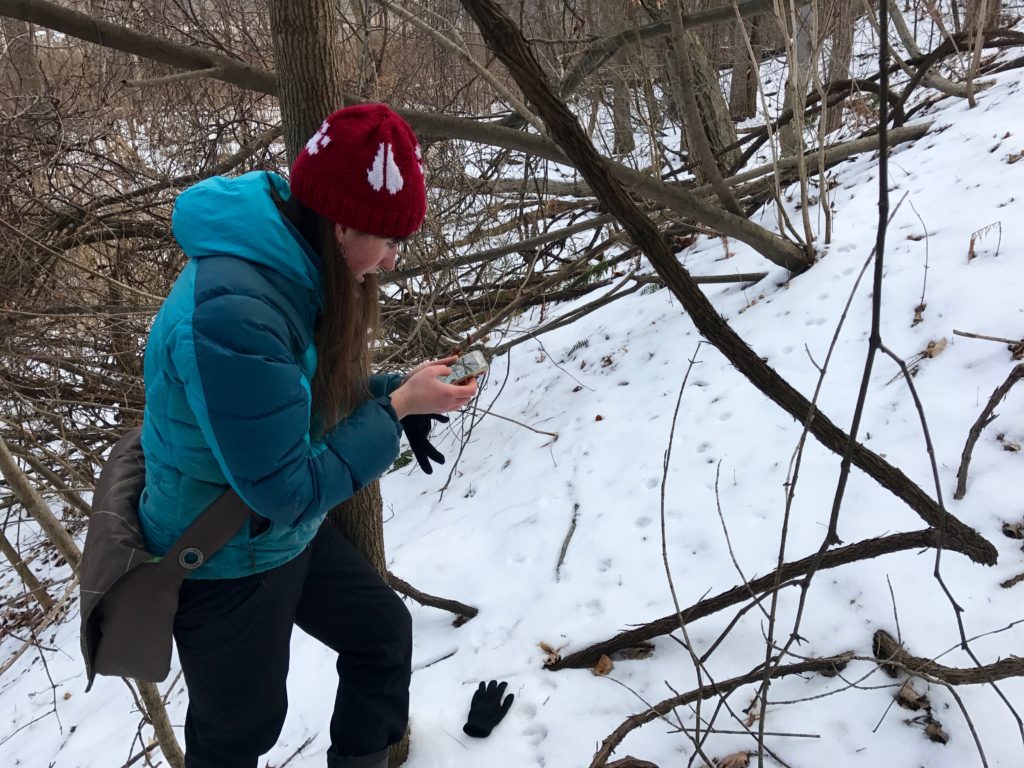
Environmental concerns, such as the ones listed above, have pitted South Burlington residents against one another for many years, but recently there have been measures taken to unite the forces of recreation and conservation. Sophie Mazowita, a former student at UVM and environmental consultant to the South Burlington Recreation & Parks department, laid the groundwork for this endeavor by completing a yearlong study of the park in 2013 that addressed these concerns and explored what park officials could do to better manage the park and, thus, in the process ease these tensions between visitors. Her research lead to the creation of the first and only park management plan in 2014. The plan is an extensive 48-page document that provides effective strategies to help alleviate many of the park concerns that Sophie found in her research, such as those ranging from invasive plants to parking and traffic management.25 For the purpose of my project, I will see how the plan provides strategies to the specific problems of off-leash dog impacts and unofficial trail use, which I have already mentioned above, and I will show how these strategies reflect an even balance of conservationist desires and recreational desires.
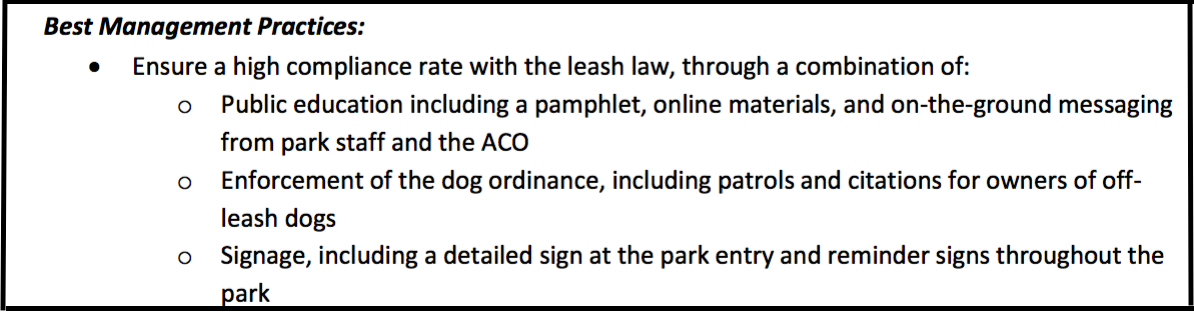

First off, in reference to off-leash dog impacts, park officials realize that dog owners are among the most primary and most regular users of the park so they understand that, when finding solutions to this problem, it is “a high priority to listen to the needs of this user group.” 26 It is vitally important that contributors to this management plan understand the importance of dogs to the park, because it helps ensure that their strategies don’t greatly hinder this main source of park recreation. Instead of making the park a dog-free zone as some people had suggested, the plan instead provides a solution of posting signs around the park, that help remind owners of the rules, and the plan also provides a system of educating the people by way of pamphlets and other resources, so that dog owners can better understand the harmful effects that their dogs can have on the environment. 27 Similar to the solutions about off-leash dog impacts, the plan also provides a solution to the problem of unofficial trail usage by implementing a program of signage to better educate people about the effects of going off the trails. 28 Furthermore, the plan even states that park officials are considering “designating one or two official access points to these highly-trafficked areas,” 29 which shows that considerable thought is being given to try to wisely allow this increased use of recreation without harming the environment and the ecology further.
The natural beauty of Red Rocks Park that existed in 1905 still lives on today. Although usages and interactions with the land have drastically changed over time, the ways in which people interact with the land today definitely still embodies people’s vision of Red Rocks as this “gem of the lakeshore.” In fact, the 2014 management plan, which is the prime example of the fusion between recreational and conservationist ideology, helps reflect this vision the most due to its ability to show, just as Cherly Morse observed, that these residents “feel a stronger sense of belonging to their Vermont landscape rather than their own piece of land.” 30 This communal love for this public park is the exact reason why these opposing groups were able to unite and the exact reason why this park’s beauty will continue to live on for generations to come.
Cover Image of a section of Red Rocks Park along Lake Champlain, courtesy of Google Images.
Will Shadek is a Junior History major at Dartmouth College who is writing this project for his Geography class about New England. He is an occassional visitor of Red Rocks Park.
Lilian Baker Carlisle, “Looking Around South Burlington, Vermont,” (Vermont: Chittenden County Historical Society: 1975), 371. ↩
Elizabeth H. Thompson and Eric R. Sorenson, Wetland, Woodland, Wildland: A Guide to the Communities of Vermont (Middlebury Bicentennial Series in Environmental Studies) (Vermont: Vermont Dept. of Fish and Wildlife and the Nature Conservancy: 2005), 25. ↩
Carlisle, “Looking Around South Burlington…,” 371. ↩
Ryden, Kent C. “Big trees, back yards, and the borders of nature.” Michigan Quarterly Review 40, no. 1 (2001): 128. ↩
Carlisle, “Looking Around South Burlington…,” 371. ↩
Sophie Mazowita, Red Rocks Park: Working towards a community-based management plan (April, 2013), 8. ↩
Burlington Weekly Free Press, “Red Rocks: Improvements now being made there by Edward P. Hatch,” (August 14, 1891), Accessed November 11, 2017. ↩
Burlington Weekly Free Press, “Red Rocks: Improvements…” ↩
Carlisle, “Looking Around South Burlington…,” 372. ↩
Carlisle, “Looking Around South Burlington…,” 372. ↩
Carlisle, “Looking Around South Burlington…,” 372. ↩
Thompson and Sorenson, Wetland, Woodland, Wildland…, 28. ↩
Sophie Mazowita, Red Rocks Park: Working towards a community-based management plan (April, 2013), 8. ↩
Mike Phoenix, “Beautiful Park” TripAdvisor (blog), October 17, 2017, https://www.tripadvisor.com/ShowUserReviews-g57402-d2694684-r534938700-Red_Rocks_Park-South_Burlington_Vermont.html. ↩
Mazowita, Red Rocks Park…, 35. ↩
Mazowita, Red Rocks Park…, 35. ↩
Steven R., “Red Rocks Park” Yelp (blog), November 21, 2016, https://www.yelp.com/biz/red-rocks-park-south-burlington. ↩
Mazowita, Red Rocks Park…, 45. ↩
“Red Rocks - Burlington, Vermont” Big Swings (blog), August 25, 2016, https://www.bigswings.com/2016/08/25/red-rocks-burlington-vt/. ↩
Anne Geggis, “Call Grows for Burlington to ease its restrictions,” Burlington Free Press, February 4, 1999, Accessed November 1, 2017, http://burlingtonfreepress.newspapers.com/image/202562743/?terms=%22red%2Brocks%2Bpark%22%2B%22Dogs%22. ↩
Geggis, “Call Grows for Burlington…”. ↩
Anne Geggis, “Council aims to collar dog gripes,” Burlington Free Press, March 10, 1999, Accessed October 27, 2017, http://burlingtonfreepress.newspapers.com/image/202580055/?terms=%22red%2Brocks%2Bpark%22%2B%22Dogs%22. ↩
Mazowita, Red Rocks Park, 27. ↩
Mazowita, Red Rocks Park, 28. ↩
Red Rocks Master Plan Subcommittee, Red Rocks Park: 2014 Management Plan, (September, 2014), 1-48. ↩
Red Rocks Master Plan Subcommittee, Red Rocks Park…, 23. ↩
Red Rocks Master Plan Subcommittee, Red Rocks Park…, 24. ↩
Red Rocks Master Plan Subcommittee, Red Rocks Park…, 21. ↩
Red Rocks Master Plan Subcommittee, Red Rocks Park…, 21. ↩
Morse, Cheryl E, Allan M Strong, V Ernesto Mendez, Sarah T Lovell, Austin R Troy, and William B Morris. “Performing a New England landscape: Viewing, engaging, and belonging.” Journal of Rural Studies 36 (October 2014): 234. ↩